
Learn how to grow lupines from seed in a cold climate garden, including soaking, cold stratification, seed starting tips, and transplanting advice for zones 3–5.
Lupines are one of those flowers that never disappoint me.
Every year when they start blooming, I’m reminded why I keep planting them. They come up early, handle our cool mountain spring weather beautifully, and bring so much color to the garden just when everything is starting to wake up. In a short growing season like ours, I’ve learned to really appreciate any perennial that’s dependable, hardy, and willing to put on a show without a lot of fuss. Lupines definitely fit that description.
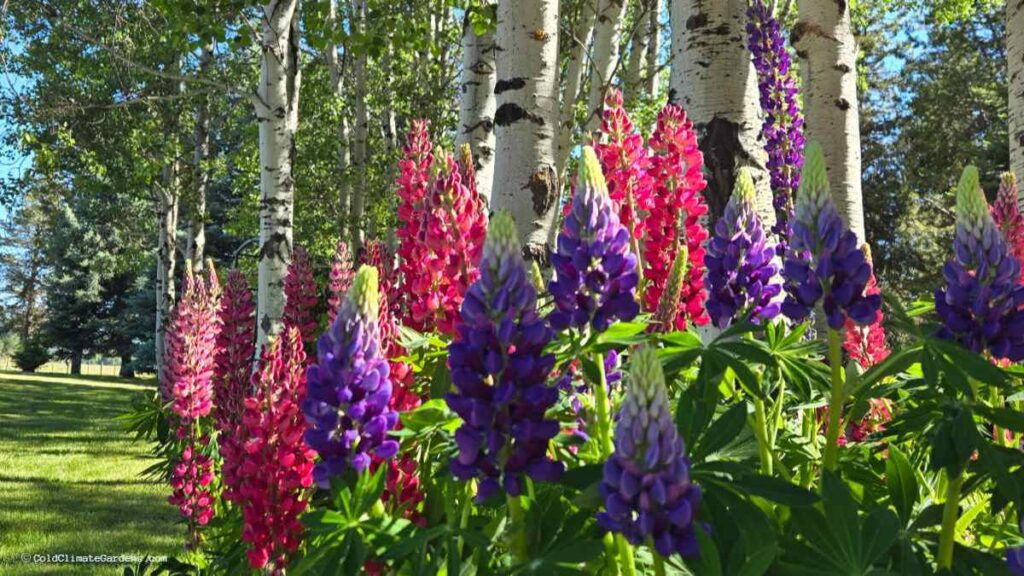
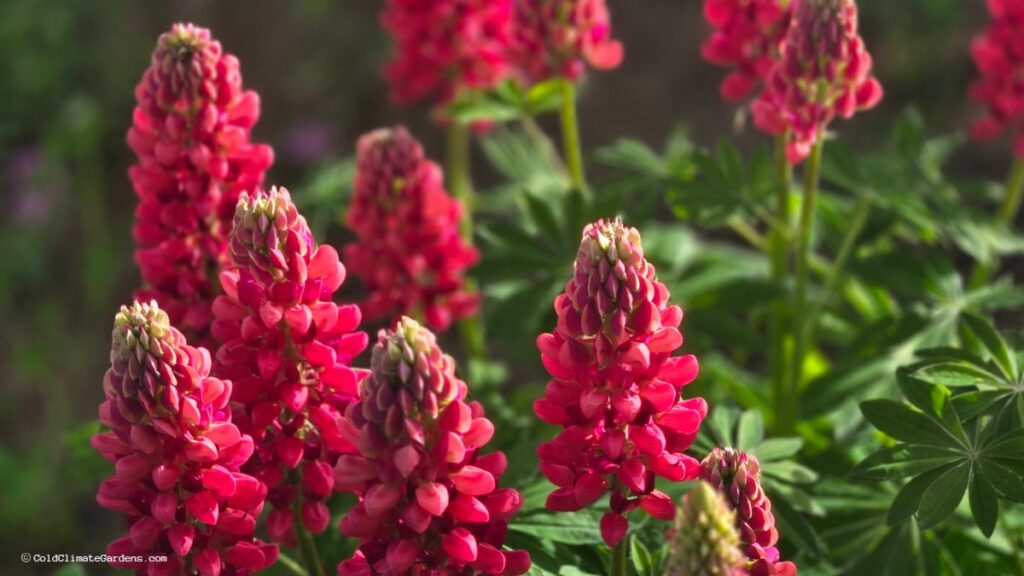
This year they’re especially beautiful. I started the red lupines in this bed from seed three years ago and planted eight seedlings in this section of the garden. Since then, they’ve filled in nicely by reseeding, which is exactly what I was hoping they would do. There’s something satisfying about watching a perennial settle in and make itself at home. When that happens in a cold climate garden, I consider it a win.
Why I Love Growing Lupines
Lupines are one of the easiest perennials I grow in our short-season garden. Once they’re established, they’re tough, reliable, and come back year after year. I also love the height and color they add to the flower beds. Their blooms stand tall above the foliage and really catch your eye, especially when planted in groups.
For those of us gardening in zones 3–5, they’re a great choice because they don’t seem bothered by cool weather the way some plants are. They emerge early, bloom in late spring to early summer, and fit right into a mountain garden setting.
Starting Lupines From Seed
I’ve had very good luck starting lupines from seed, but I will say they’re a little more particular than some of the other perennials I grow. Lupine seeds have a hard outer coating, and that tough shell can slow down moisture absorption and delay germination.
To help speed things along, I soak the seeds in lukewarm water for 24 hours before planting. I also like to cold stratify them by placing the seeds in the refrigerator for a couple of weeks before sowing. That extra step helps mimic the natural winter conditions they’d experience outdoors and usually improves germination.
I know some gardeners like to sprout lupine seeds in a damp paper towel first, but I’ve never bothered with that method. I simply sow them directly into seed-starting mix, cover the pots with cardboard to keep out the light, and place them inside a large plastic bag to hold in moisture. It’s an old habit at this point, but it’s worked well for me over the years, so I stick with it.
A Few Important Lupine Seedling Tips
Lupines grow a long taproot very early, and that root doesn’t like being disturbed. Because of that, I like to start them in deeper pots whenever possible rather than shallow seed trays. Giving them a little extra root room from the beginning makes transplanting easier later on.
They also seem to germinate better in darkness, which is why I cover the pots until the seedlings emerge. As soon as I see sprouts, I remove the cover right away and move them under grow lights or into a bright sunny window.
If you use a heat mat, keep in mind that lupines don’t need a lot of heat. I’ve found they do best with moderate temperatures rather than too much warmth. They’re naturally suited to cooler conditions, which is probably one of the reasons they do so well in my garden.
Planting Lupines in the Garden
Once the seedlings are large enough and the weather has settled down, I harden them off over the course of a week or two before planting them outside. That just means gradually introducing them to sun, wind, and cooler nighttime temperatures so they’re not shocked by the move from indoors to the garden.
When it’s time to plant them, I choose a spot with full sun and well-draining soil. Because lupines develop that long taproot, I try not to leave them sitting in pots any longer than necessary. Younger plants usually transplant better than older ones.
After they’re established, lupines really don’t ask for much. In my garden, they’ve been one of those perennials that quietly do their job year after year with very little attention from me.
Lupines Are Worth the Effort
If you garden in a cold climate, lupines are well worth growing. They’re hardy, beautiful, and perfectly suited to those of us dealing with short growing seasons and cool spring weather. I love flowers that can handle our conditions and still come back every year stronger than before, and lupines have absolutely earned their place in my garden.
The best part is that once they settle in, they can start reseeding and filling out an area naturally. That’s exactly what mine have done, and I couldn’t be happier with them. When I walk past this bed and see those blooms glowing in the morning or evening light, I’m reminded that some plants are simply made for cold-climate gardens.
My Suggestions for Growing Lupines
If you’re thinking about adding lupines to your garden, here are a few things I’d recommend based on what’s worked for me:
✅ Soak seeds before planting to help soften the seed coat and improve germination.
✅ Cold stratify seeds in the refrigerator for a couple of weeks before sowing.
✅ Start seeds in deeper pots since lupines develop a long taproot early.
✅ Keep the pots dark until germination, then move seedlings into bright light right away.
✅ Don’t baby them with too much heat. Lupines are cool-weather plants and generally do better with moderate temperatures.
✅ Transplant them while they’re still young so the roots aren’t disturbed any more than necessary.
✅ Be patient the first year. Once lupines get established, they’re often much more impressive in the years that follow.
Happy Gardening!
Debbie 🌿❄️🌸
Cold Climate Gardens
Helping Zone 3 & 4 Gardeners Grow with Confidence